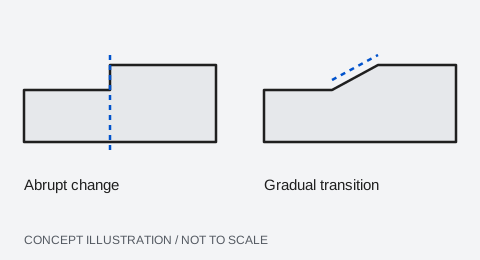
Wall Thickness
Review section changes to manage filling, cooling and localized shrinkage.

PLASTIC PARTS / FROM DESIGN TO PRODUCTION
From plastic part design reviews and mold development to sample approval and production, Omita supports your injection molding projects with practical DFM feedback, clear technical communication, and coordinated manufacturing services.
Online RFQ submission is not yet enabled. The quote page lets you prepare details; nothing is sent.
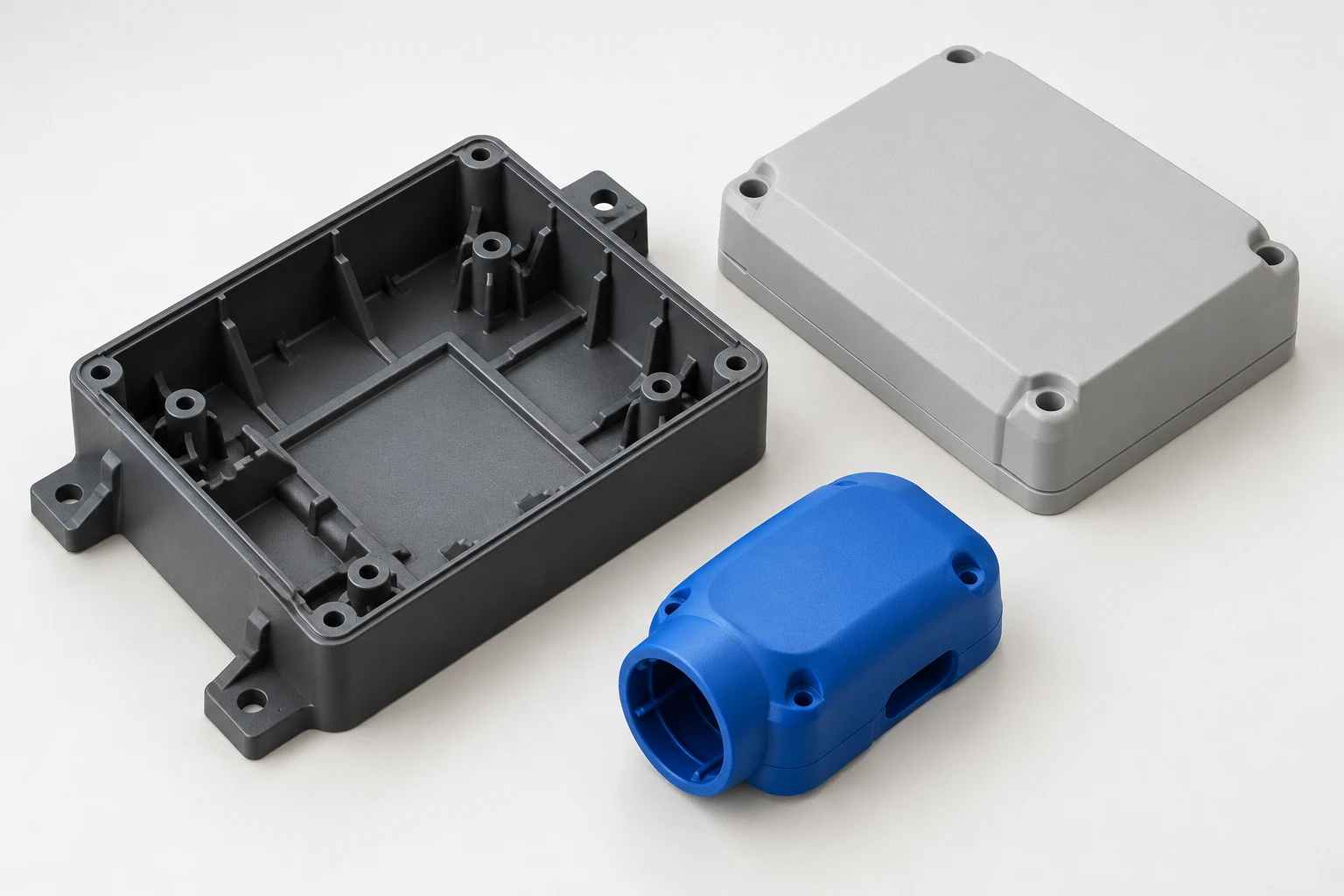
Omita manages engineering communication, DFM discussions, quotations and project follow-through. Tooling and molding are carried out by cooperating manufacturers.
01 / REVIEW BEFORE TOOLING
Five practical review topics before tooling decisions. The right approach depends on the part, resin and mold concept.
Review section changes to manage filling, cooling and localized shrinkage.
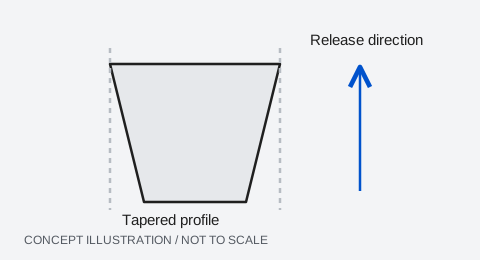
Review taper against release direction, part depth and surface texture. The profile is conceptual, not a complete mold-release design.
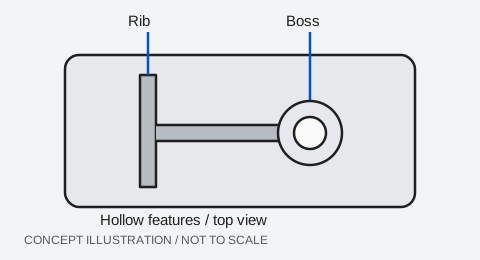
Balance stiffness and assembly needs with wall sections around ribs and hollow bosses.
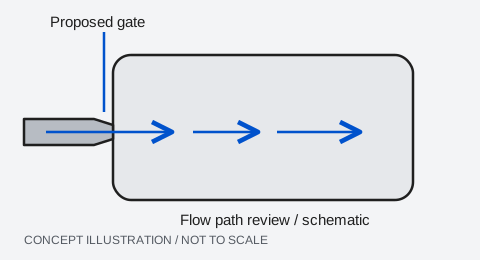
Consider flow, visible gate marks and functional surfaces when proposing a gate. Arrows show a concept, not a mold-flow simulation.
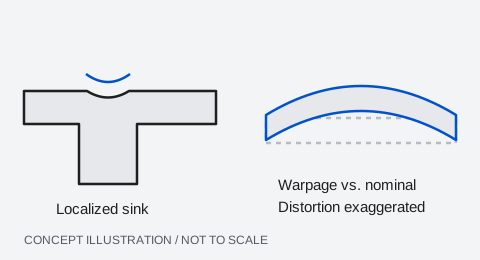
Review heavy sections and uneven cooling against appearance and fit needs.
Concept illustrations only, not to scale or manufacturing specifications. Tapers, flow and distortion are schematic; no fixed design values are implied.
02 / TURN DESIGN DECISIONS INTO TOOLING
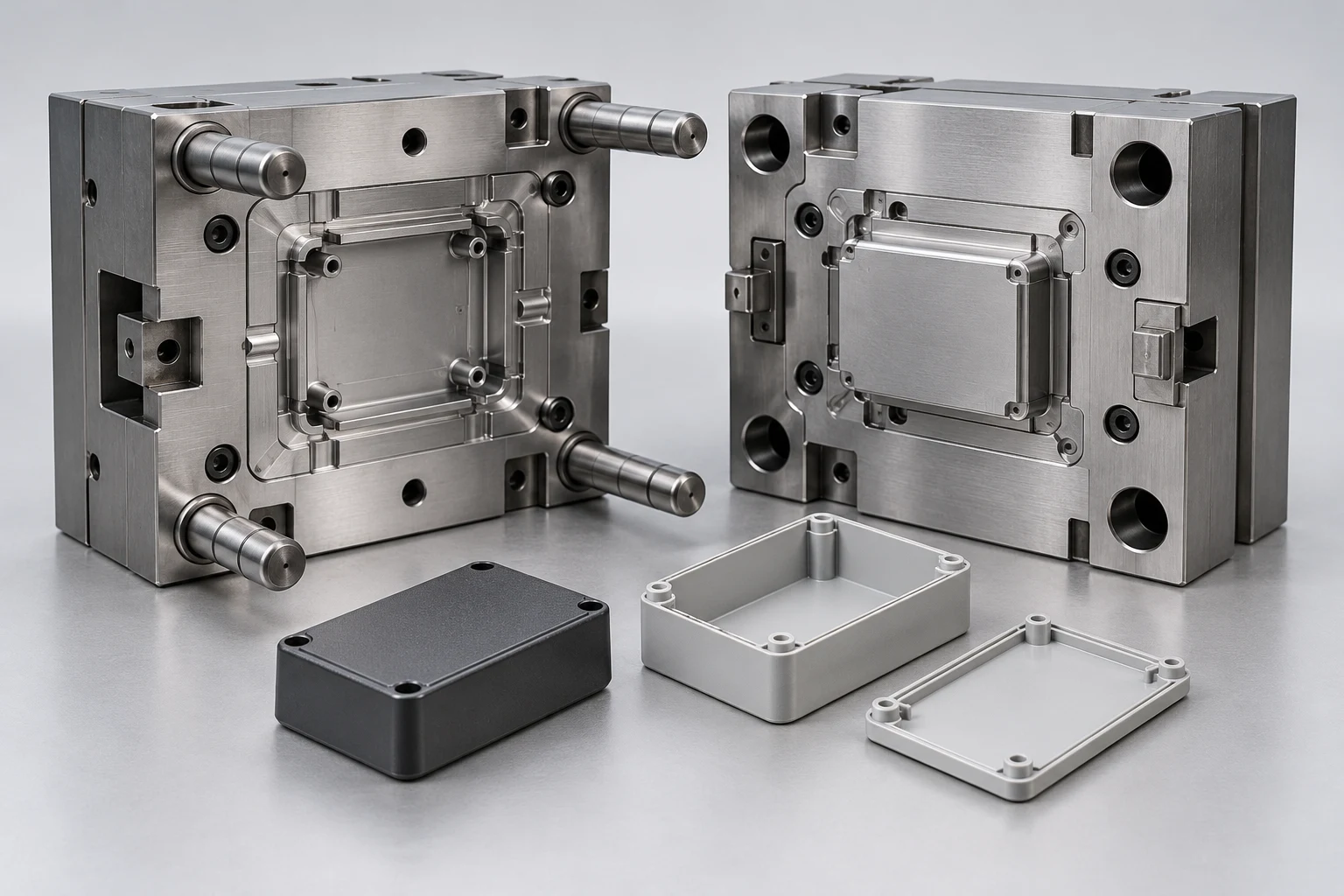
A tooling proposal should connect part function with a practical mold concept. Omita brings customer decisions and manufacturing feedback into one review process.
Mold specifications, ownership, maintenance and any changes must be agreed for the project. Listed activities do not imply Omita owns tooling facilities.
Explore mold making services →03 / CHOOSE FOR THE APPLICATION
Match resin selection to function, appearance, environment and assembly.
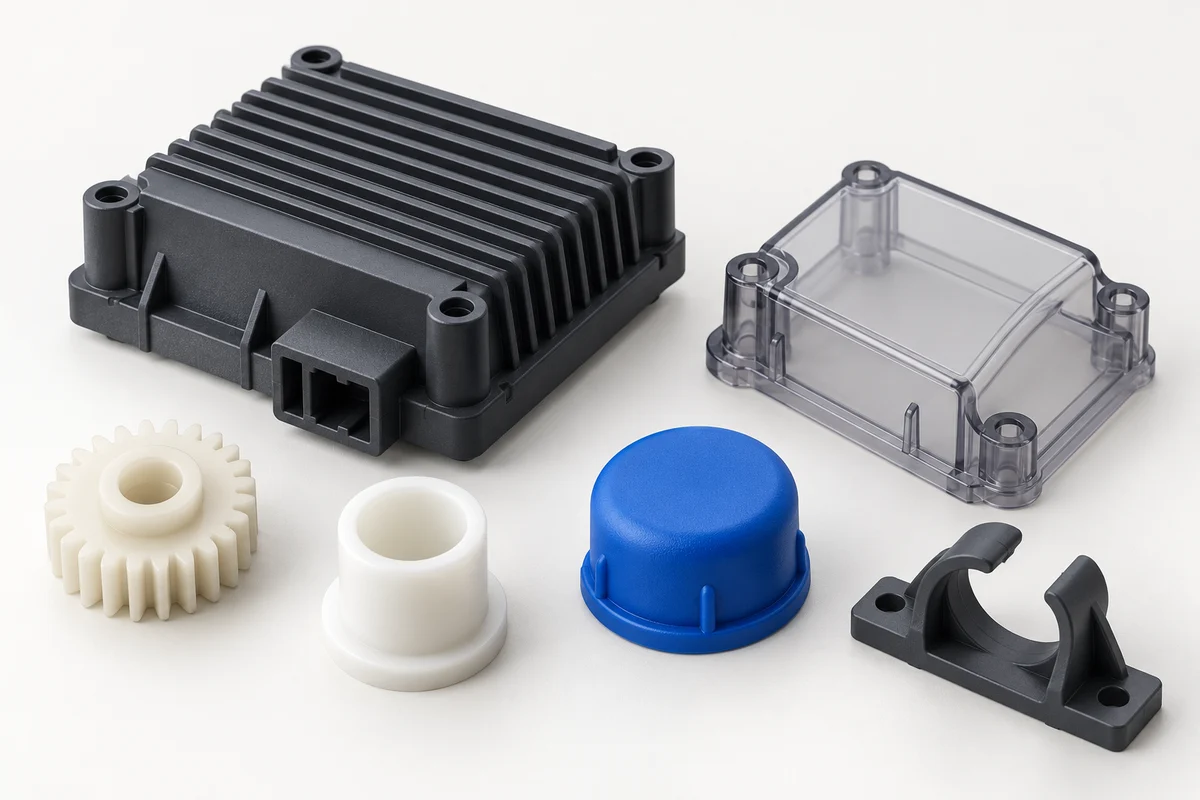
Not a verified Omita resin catalog. Supply, grade suitability and processing availability must be confirmed per project.
Housings and general-purpose parts; review appearance and impact needs.
Tough or transparent parts; review grade and chemical exposure.
Lightweight parts and flexible features; review stiffness and shrinkage.
Mechanical parts; account for moisture and conditioning.
Sliding and mechanical parts; review fit and wear conditions.
Functional enclosures; properties depend on the selected blend and grade.
04 / DECISIONS AT EACH STAGE
Six project stages, with sample approval requirements agreed by both parties.
Confirm geometry, drawing revisions and project priorities.
Discuss molding risks and the proposed tooling approach.
Develop the tool against agreed design decisions.
Review initial samples and any necessary corrections.
Confirm acceptance against the agreed sample criteria.
Produce and inspect against approved specifications.
Actual steps follow the agreed project plan. Omita follows up inspection requirements and coordinates packing and delivery with cooperating manufacturers.
05 / AGREE WHAT ACCEPTANCE MEANS
Critical dimensions, cosmetic requirements, assembly fit, and inspection expectations are reviewed before production.
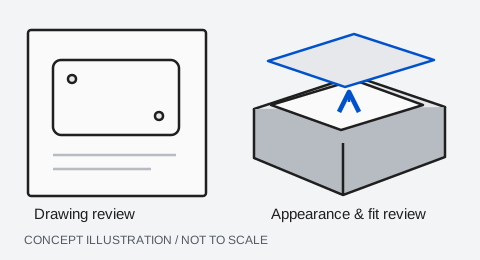
Inspection methods, tolerances and acceptance criteria are agreed per project; no default CNC tolerance standard is implied.
Agree visual criteria for gate marks, parting lines, sink, warpage, texture and color.
Review critical dimensions and mating-part fit, taking resin shrinkage into account.
Confirm sample acceptance, inspection needs and records, and resolve open issues before production release.
06 / PRACTICAL PROJECT QUESTIONS
Key decisions to discuss before developing a mold.
Provide a 3D model, preferably STEP, and a revision-controlled 2D drawing with critical dimensions. Include quantity, resin preferences, finish and assembly notes.
Draft helps a part release from the tool. The suitable taper depends on release direction, depth, texture and resin, so it is reviewed for each design.
Wall sections affect filling, cooling and shrinkage. Heavy sections and abrupt changes can contribute to sink or warpage; DFM considers more uniform sections where practical.
Gate position balances flow, geometry, appearance and tooling layout. Visible marks and functional surfaces are discussed before the design is agreed.
Review sample dimensions, appearance and assembly against agreed criteria. Corrections may require another trial before customer approval and production release.
YOUR NEXT PLASTIC PART
Prepare your drawings, quantity, resin preferences and notes on appearance, assembly and critical features.
Online submission is not yet enabled. The quote page can help you prepare details, but no inquiry or files will be sent.