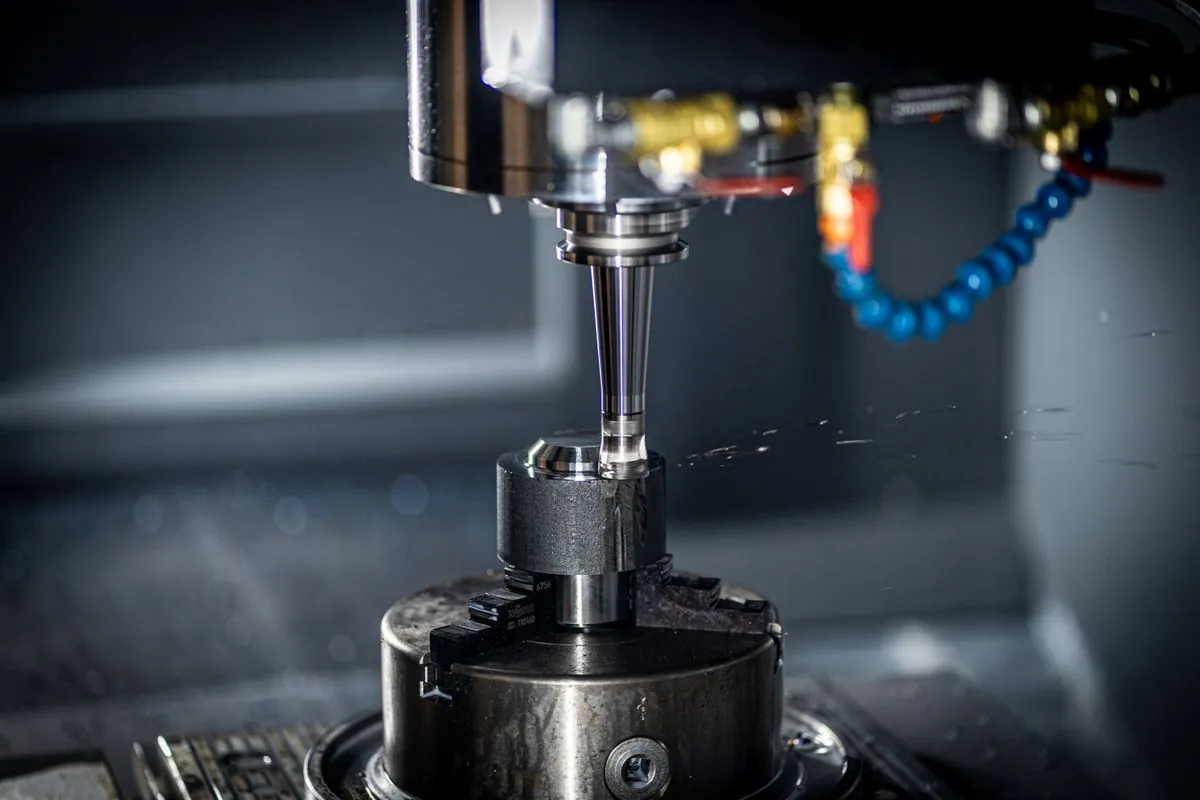
ROTATING CUTTING TOOL
CNC Milling
Rotating tools machine complex shapes, flat faces, pockets and multi-sided features.
- Complex shapes
- Pockets
- Multi-sided features

CNC MACHINING / CUSTOM PARTS
From prototypes to production, Omita supports custom CNC machining projects with practical DFM feedback, clear technical communication, and coordinated project follow-through.
Online RFQ submission is not yet enabled.
01 / MACHINING PROCESSES
CNC milling and turning through cooperating factories, with drawing review, DFM and project management from Omita.
ROTATING CUTTING TOOL
Rotating tools machine complex shapes, flat faces, pockets and multi-sided features.
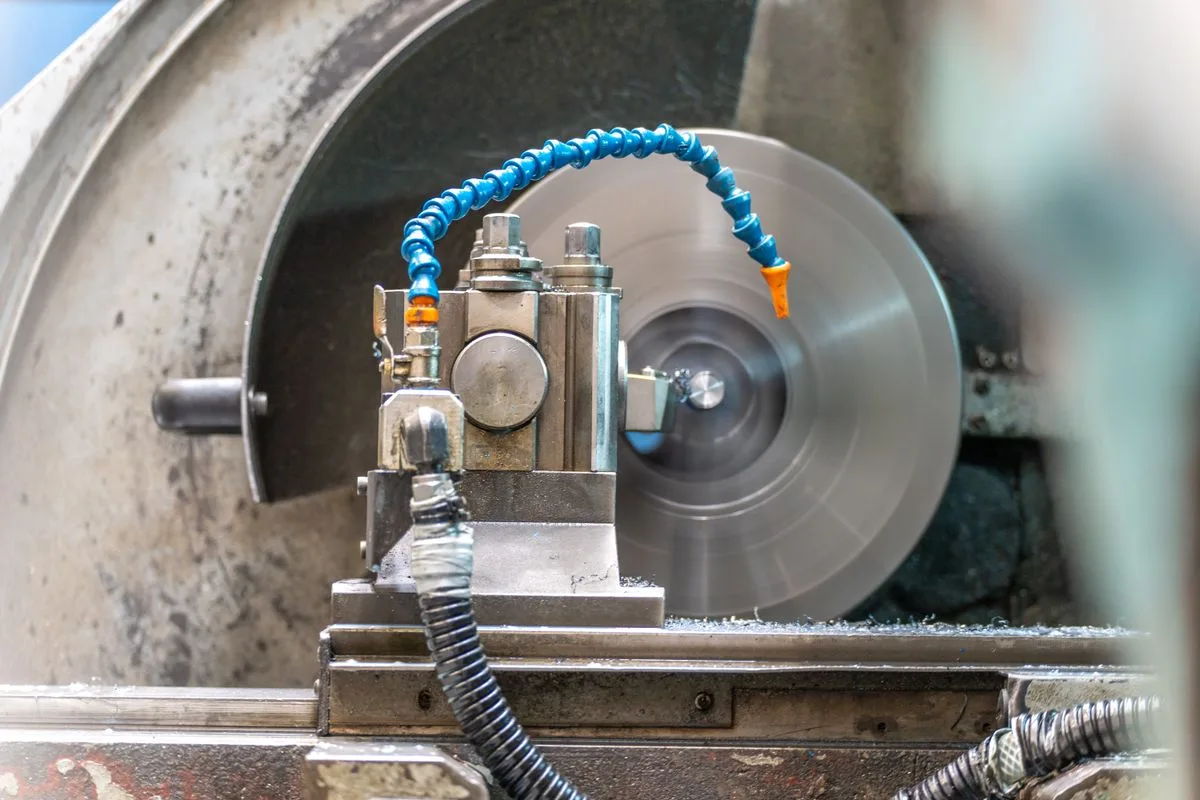
ROTATING WORKPIECE
Machining for shafts, sleeves and cylindrical parts with bores, threads and other rotational features.
X / Y / Z
Three linear axes machine flat faces, pockets and holes. Features on other sides may need additional setups.
+ ROTARY AXIS
A rotary axis adds access around the workpiece for features on multiple sides or around cylindrical geometry.
+ TWO ROTARY AXES
Two rotary axes provide additional tool orientations for angled features, contoured surfaces and complex geometry.
02 / MATERIAL SELECTION
Six material categories for custom machined parts. Exact grades and application suitability are reviewed per project.
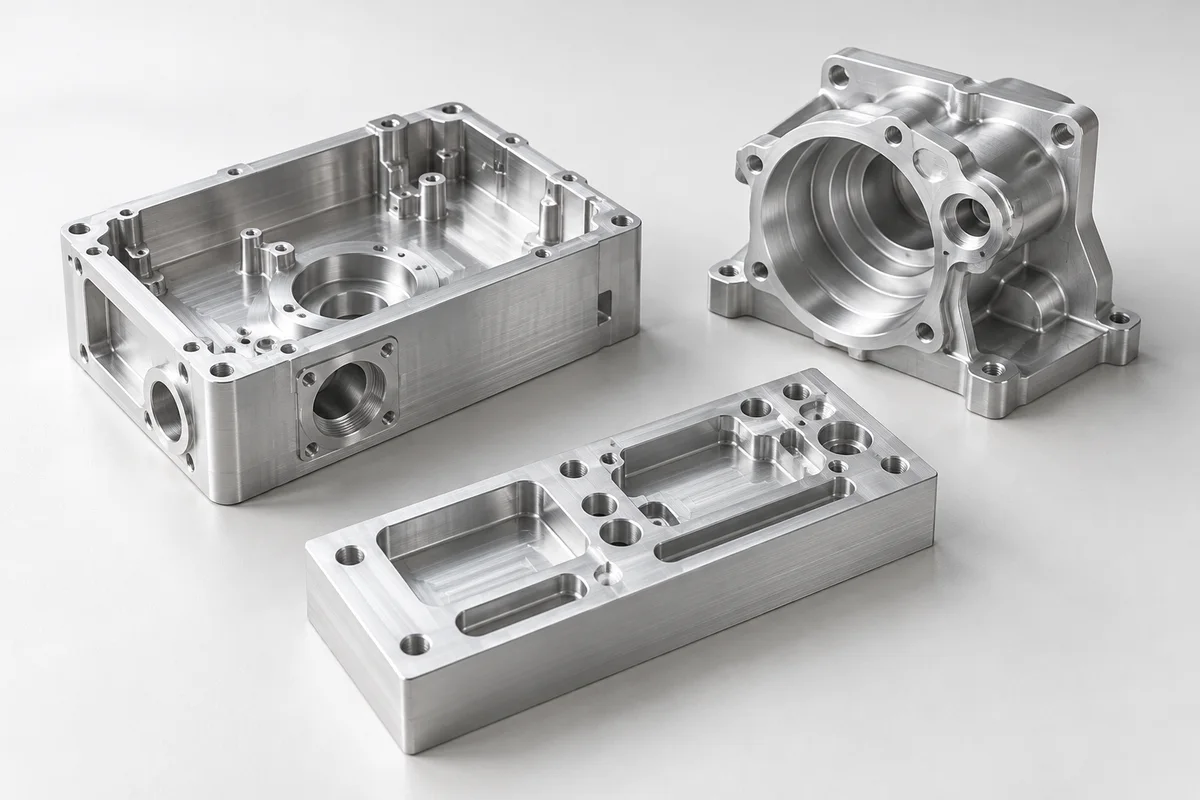
A lightweight choice for housings, brackets and enclosures. Grade and finish selection depend on the application.
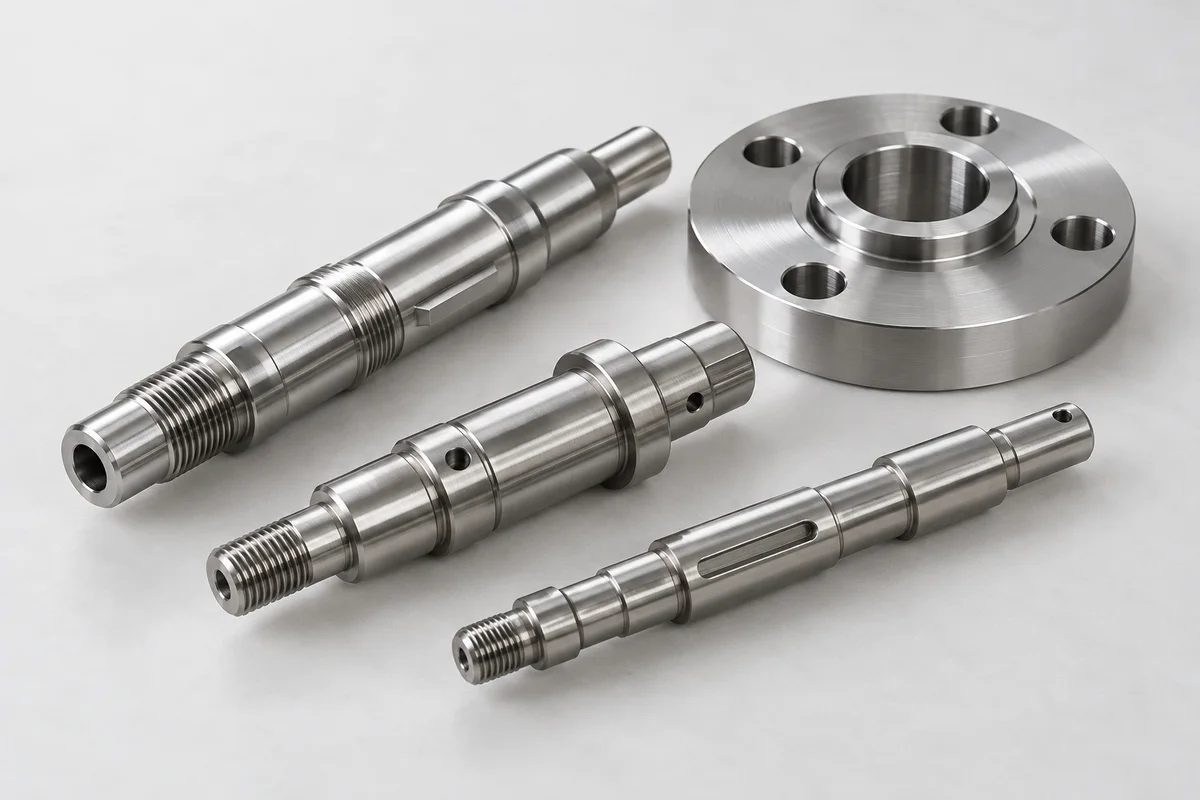
Commonly selected for corrosion-resistant components and durable fittings. Grade selection influences machining and surface finish.
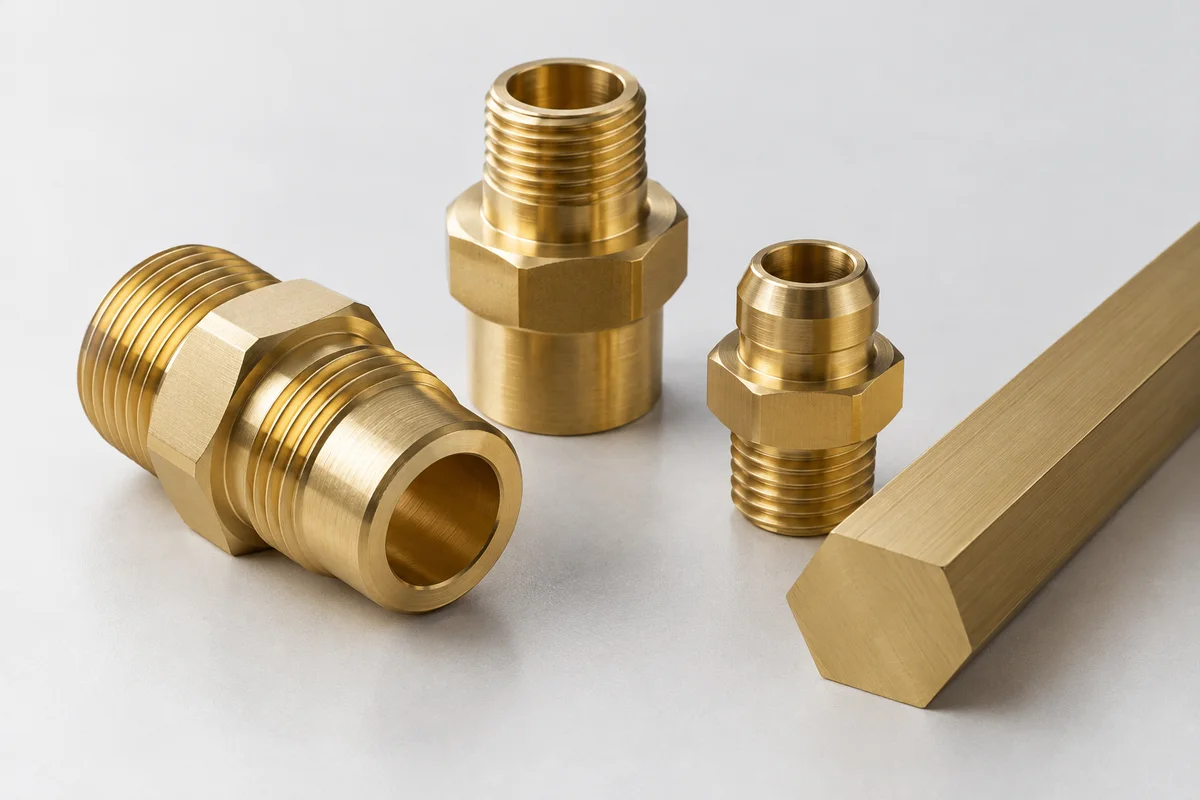
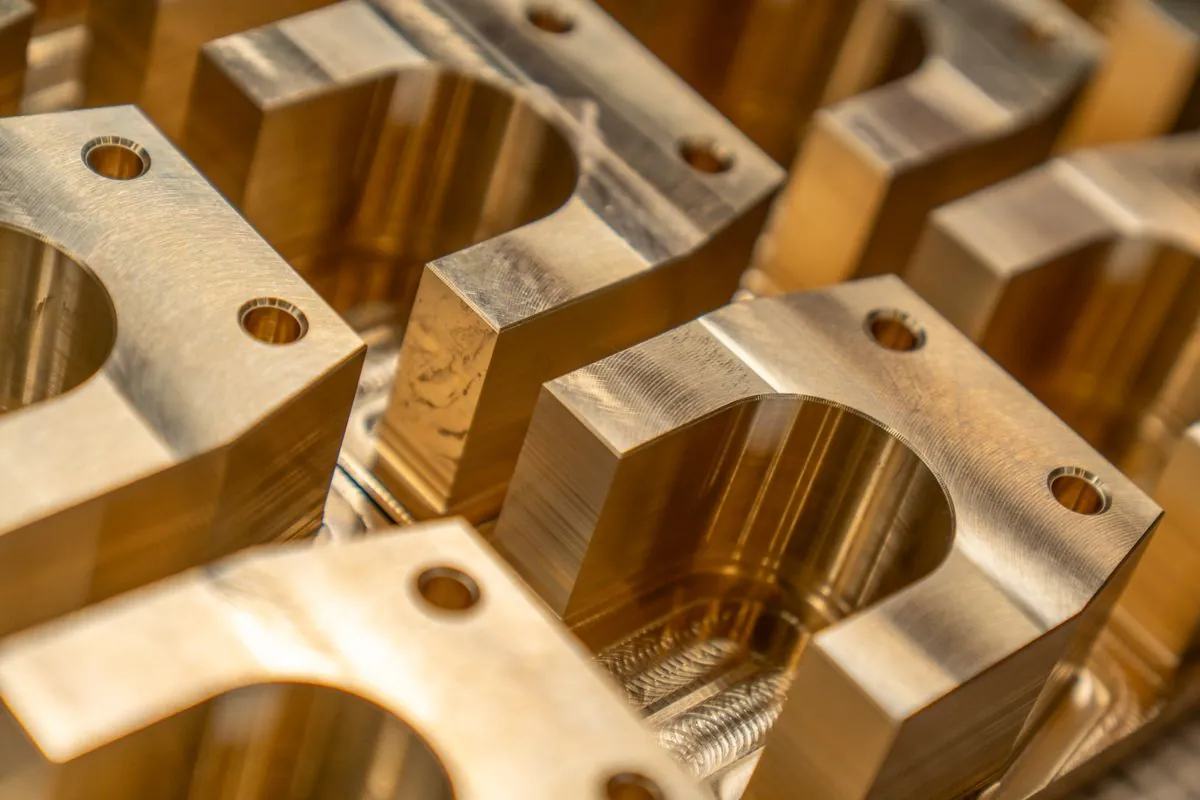
Well suited to fittings, turned components and detailed features. Its warm appearance also suits decorative parts.
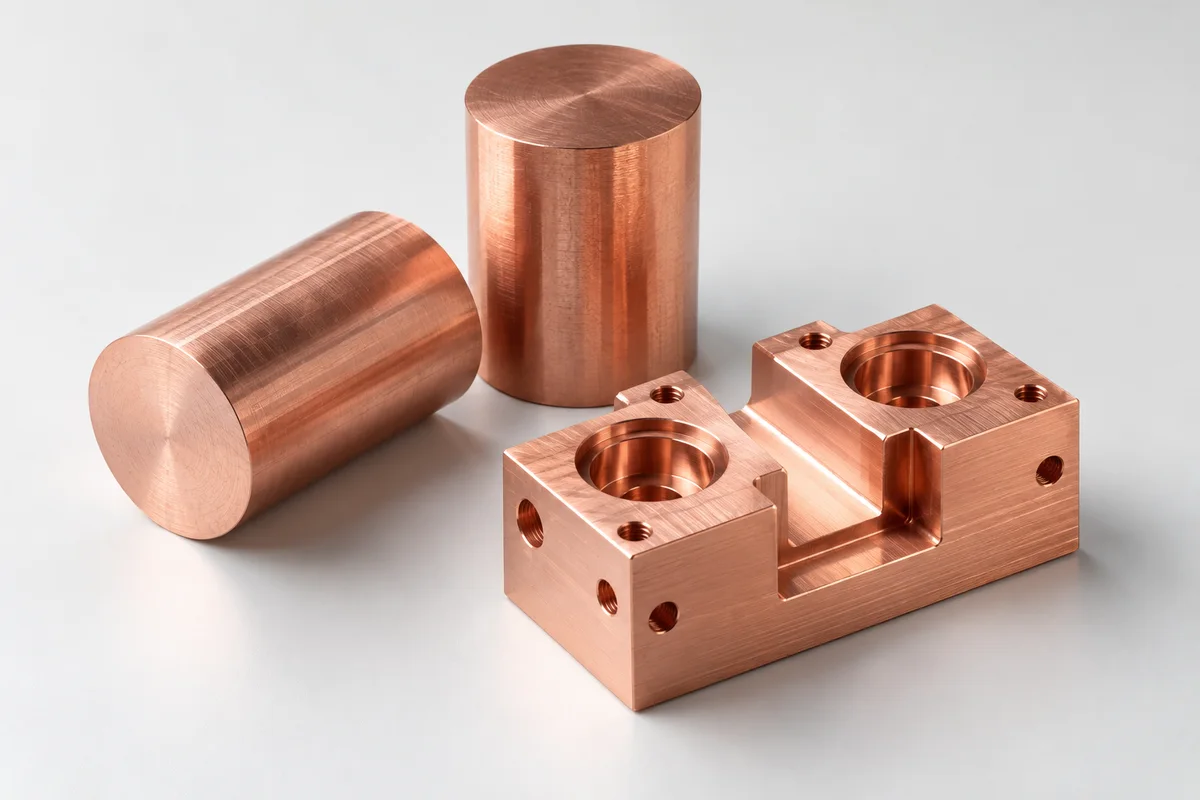
Used for electrical contacts and heat-transfer components. Soft features and surface condition need care during machining.
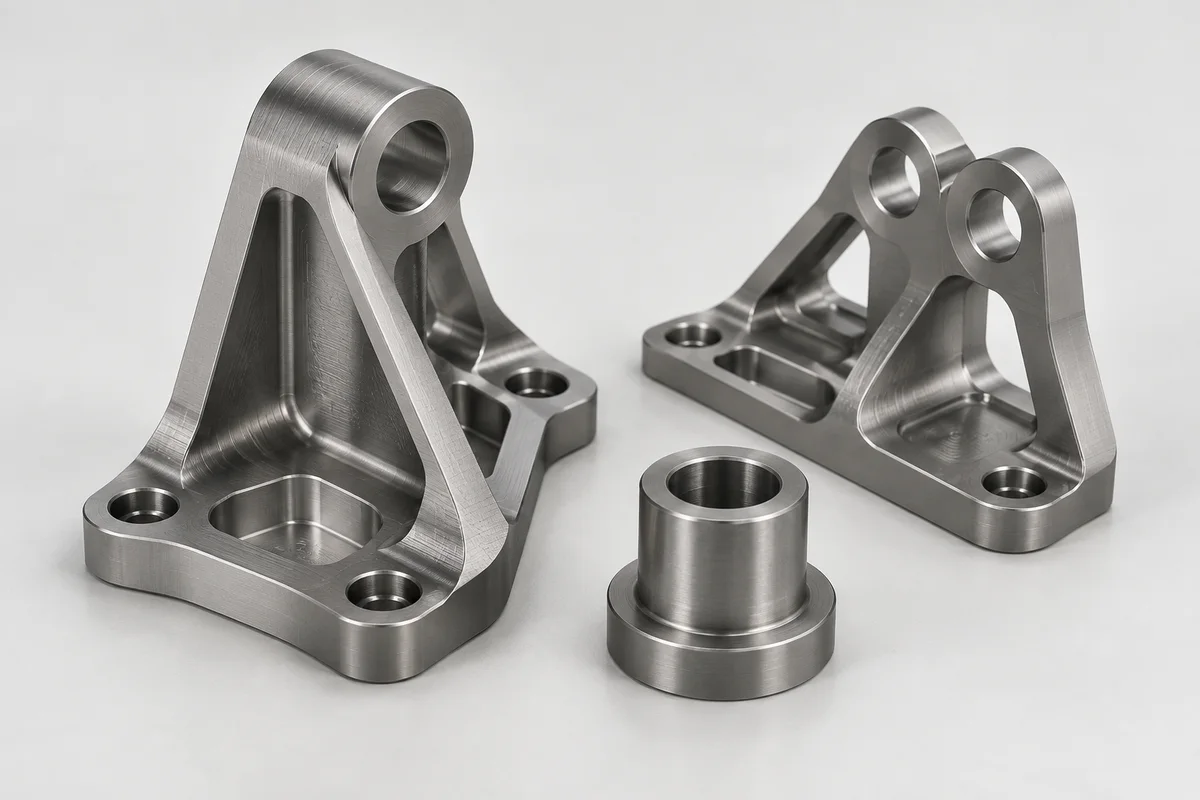
Selected for strength-to-weight and corrosion resistance. Part geometry and grade guide machining strategy.
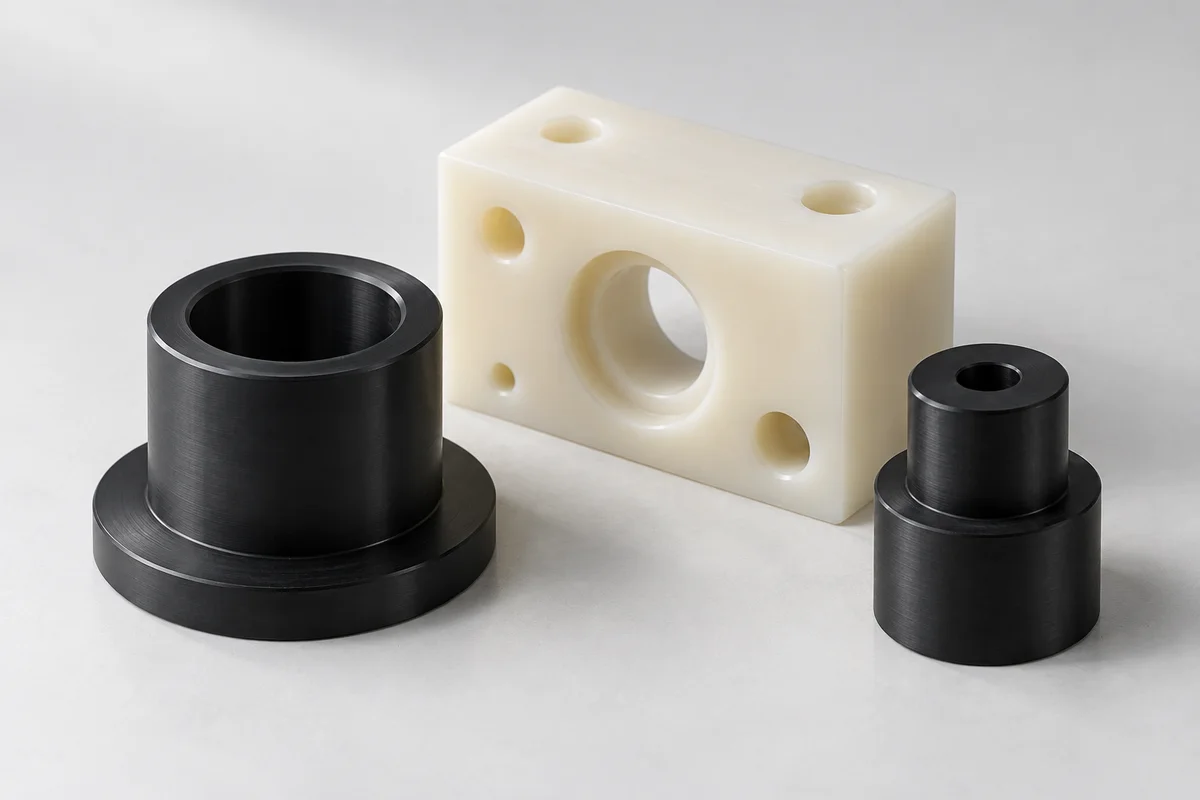
Options for insulating parts, bushings and lightweight components. Polymer choice depends on load, temperature and environment.
03 / SURFACE REQUIREMENTS
Finishing through cooperating factories, selected for part function, appearance and drawing specifications.
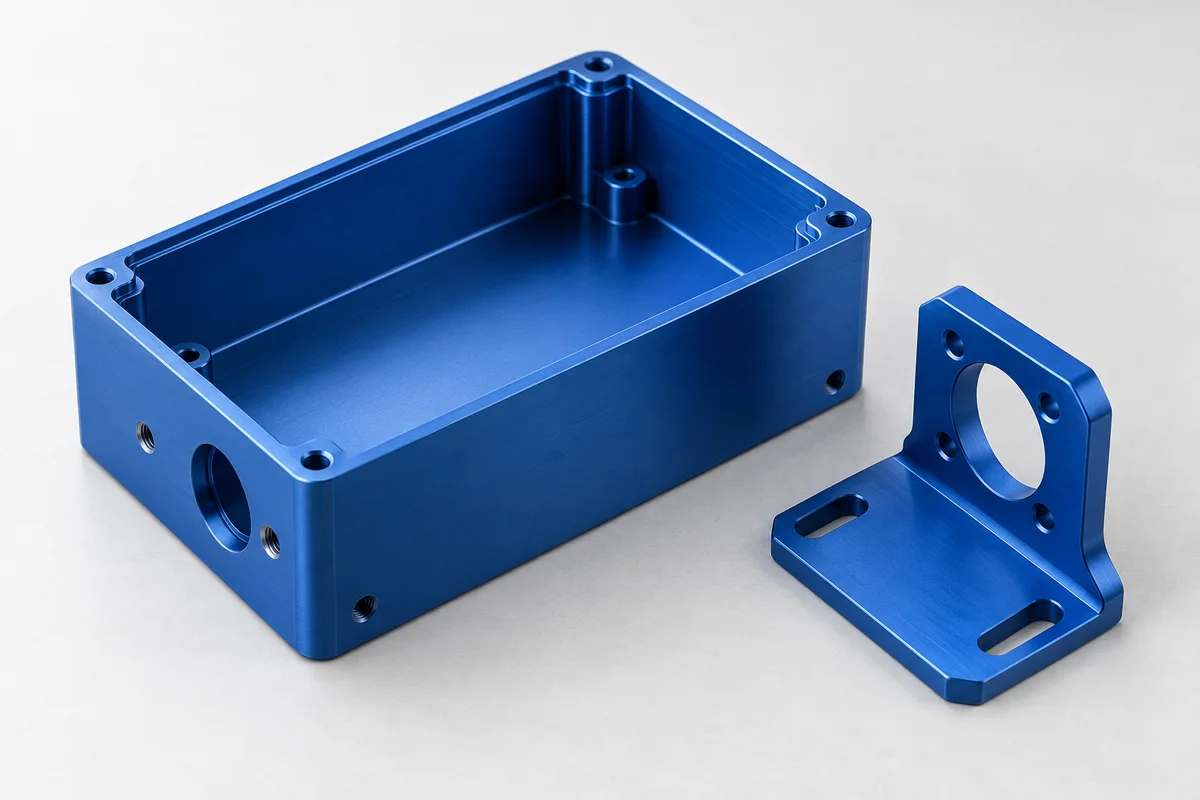
An oxide-layer treatment for aluminum, often chosen for protective or decorative surfaces. Appearance and masking areas are reviewed with the drawing.
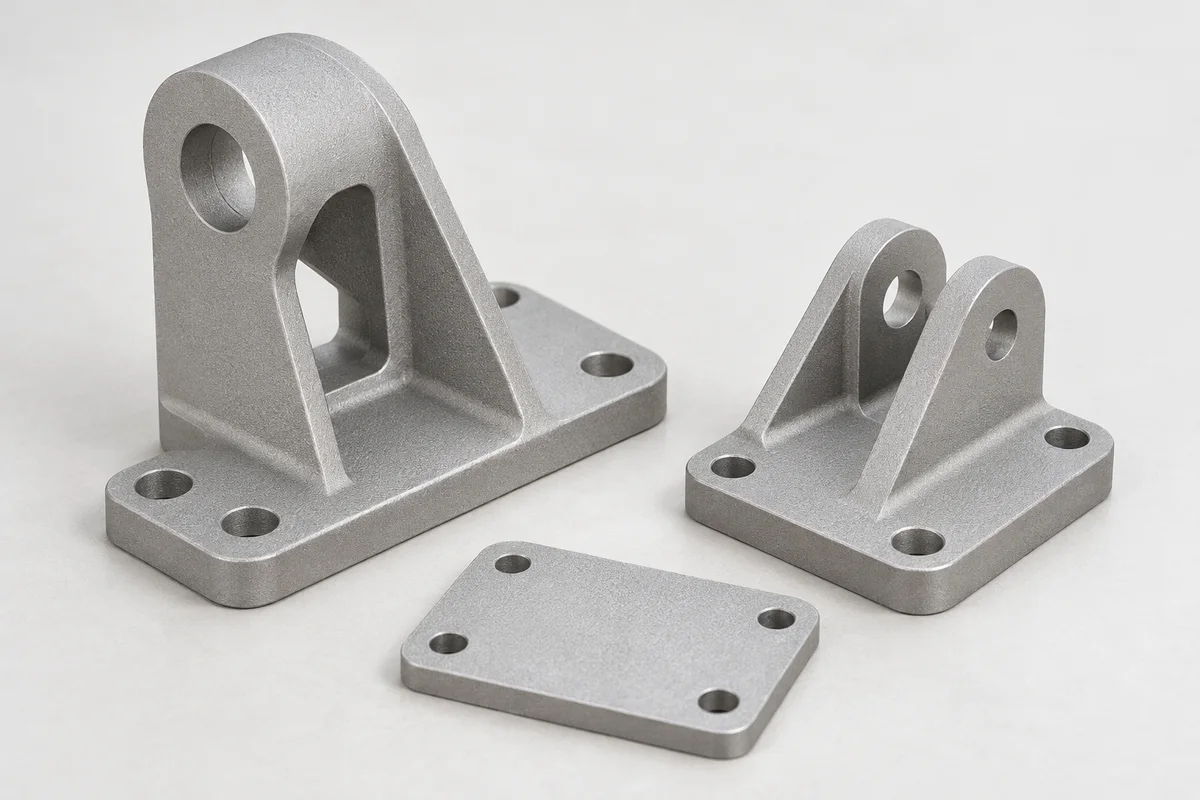
Abrasive treatments create a matte texture or prepare a surface for further finishing. Media and texture are selected for the part.
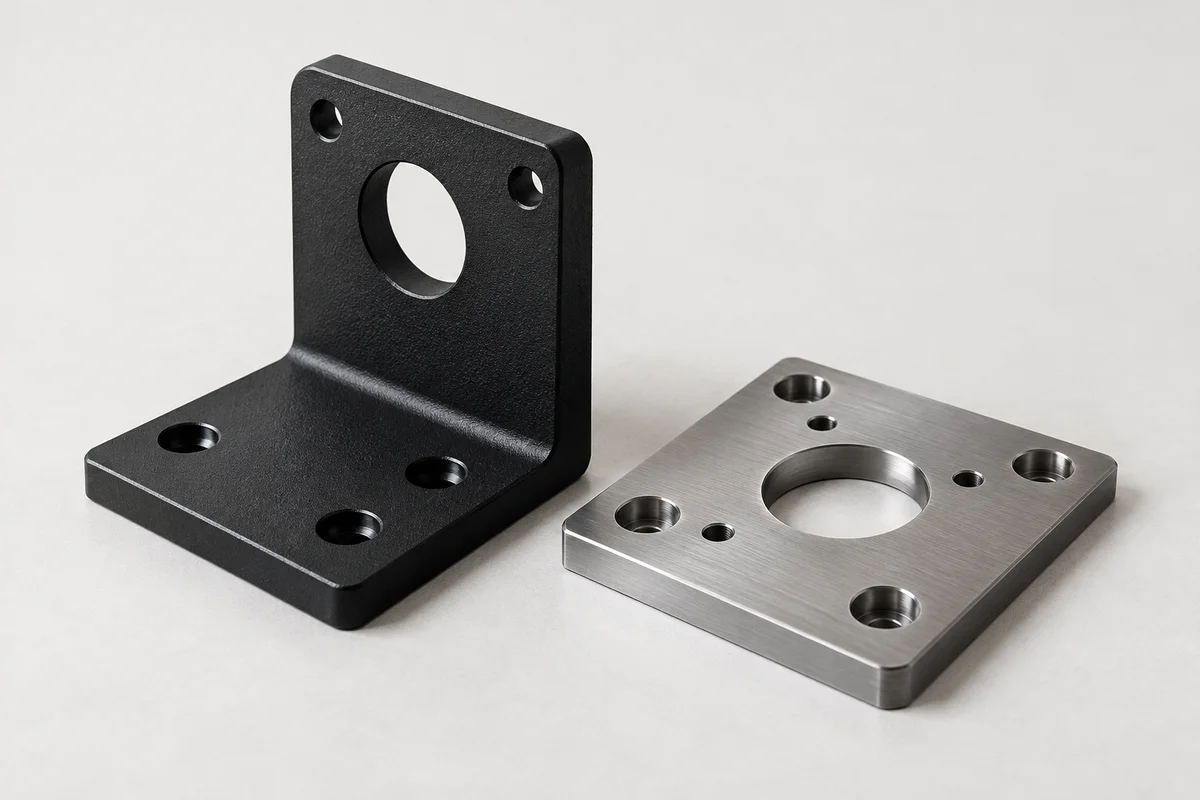
A cured coating used for protective and decorative surfaces. Specify color, masking areas and any coating allowance.
AI-generated references illustrate appearance only. Material grades and finishing specifications are agreed per project.
04 / PROJECT SCALE
Each stage is assessed against your drawings, quantities and specifications. MOQ and lead time are agreed per project.
Review geometry, function and sample acceptance criteria.
Apply sample feedback and confirm the drawing revision and batch quantity.
Plan the order against approved drawings, quantities and inspection criteria.
05 / AGREED CHECKS
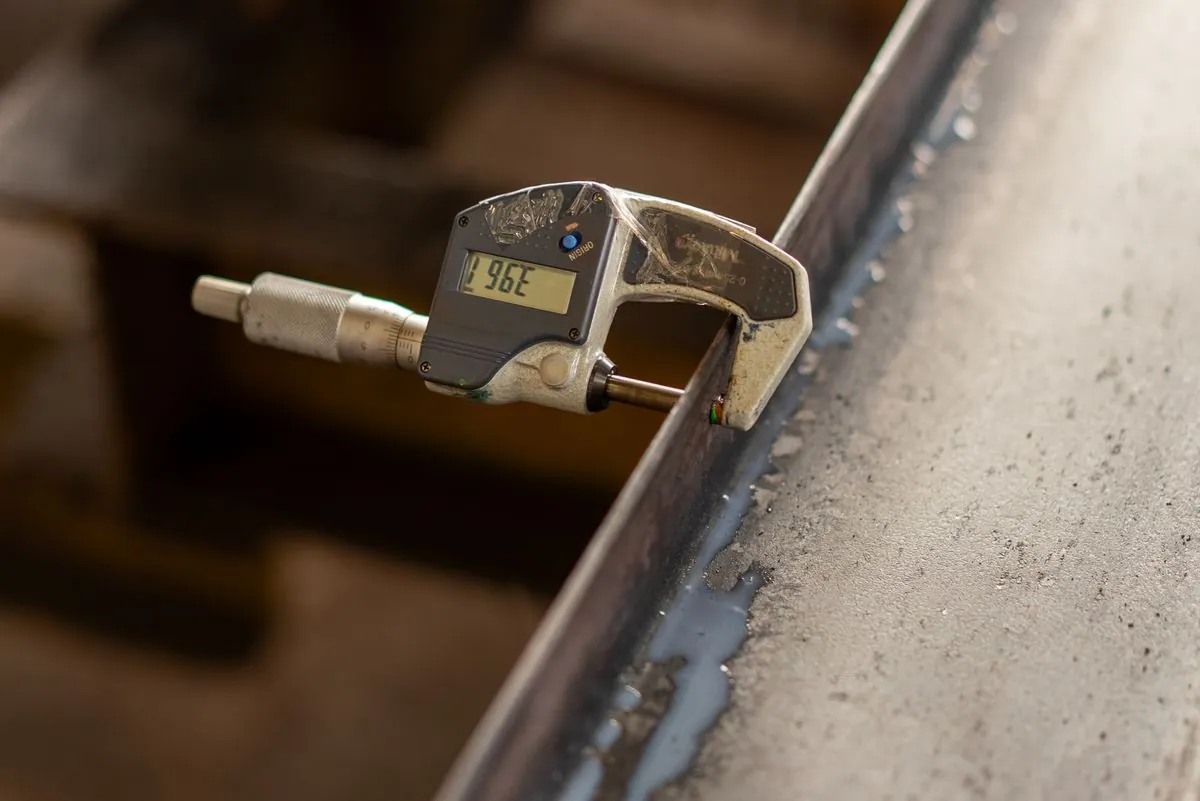
Quality checks start with the drawing and agreed inspection plan.
General dimensional tolerances may be evaluated according to ISO 2768-m (ISO 2768-1, class m), where applicable. Geometrical tolerances identified as ISO 2768-K on legacy drawings are reviewed against the specified standard edition and customer needs. Explicit drawing tolerances and critical dimensions take precedence.
Legacy K-class notation refers to ISO 2768-2, now replaced by ISO 22081:2021. The applicable edition and inspection method must be agreed; ISO 2768-mK is not an unconditional tolerance guarantee.
Standard references: ISO 2768-1 · ISO 2768-2 (withdrawn) · ISO 22081:2021
06 / FROM DRAWING TO DELIVERY
Check drawings, revisions and key features.
Discuss geometry and practical design changes.
Review pricing, scope and project terms.
Cooperating factories carry out machining.
Check agreed features and inspection records.
Arrange packing and delivery details.
Omita handles customer communication, DFM, quotations, manufacturing project management, quality requirement follow-up and delivery coordination. Actual machining and finishing are performed by cooperating factories; the listed services do not imply Omita ownership of factories, equipment or finishing lines.
Specific tolerances, material grades, part dimensions, lead times, MOQ, machine counts, inspection equipment and certifications remain unconfirmed. Applicable specifications, documentation and any additional operations or finishing processes must be reviewed before commitment.
07 / YOUR NEXT PART
Bring together your drawings, quantities and technical notes for review.
Online submission is not yet enabled. You can prepare your details on the quote page; no inquiry or files will be sent.
Prepare Your CNC Inquiry →