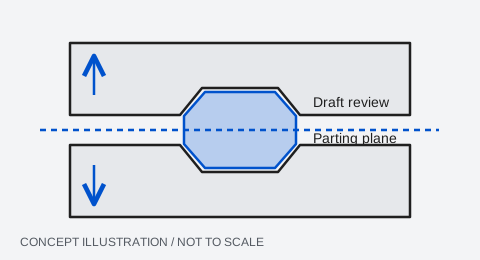
Parting Line & Draft
Review opening direction, draft and visible parting lines together with part geometry and surface finish.

INJECTION TOOLING / FROM DESIGN TO APPROVAL
From mold design review and DFM discussions to tooling development, mold trials, and sample approval, Omita helps bring your plastic part designs closer to production with practical engineering feedback and clear project communication.
Online RFQ submission is not yet enabled. The quote page helps you prepare details; no inquiry or files will be sent.
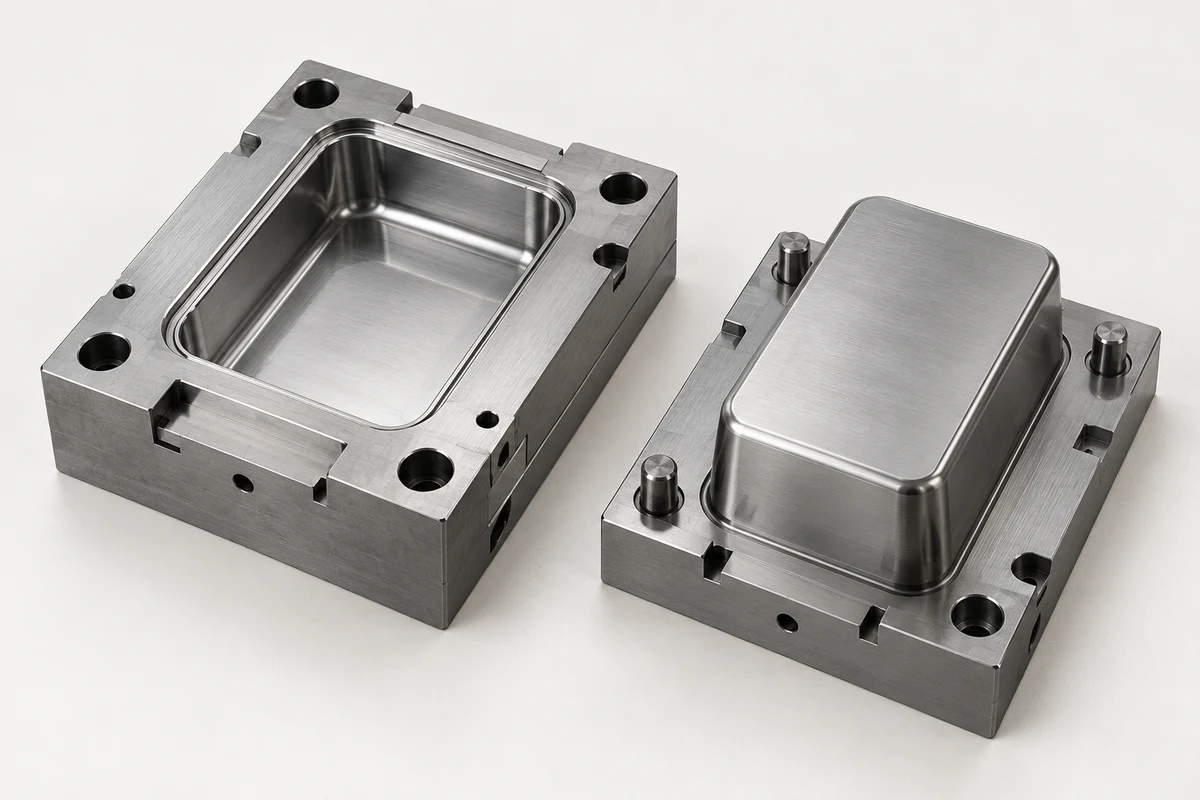
Omita handles customer communication, technical coordination, quotations and project follow-up. Mold manufacturing and molding are performed by cooperating facilities.
01 / REVIEW THE TOOLING DECISIONS
Start with the part features that shape the mold. These are discussion topics, not fixed design rules or guaranteed tooling solutions.
Review opening direction, draft and visible parting lines together with part geometry and surface finish.
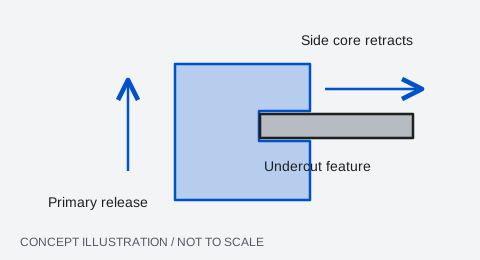
Identify features that prevent straight release. Discuss side-core movement and clearance before ejection.
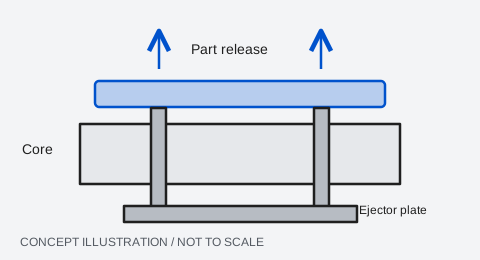
Review where ejection forces act and where marks may appear, considering stiffness and cosmetic surfaces.
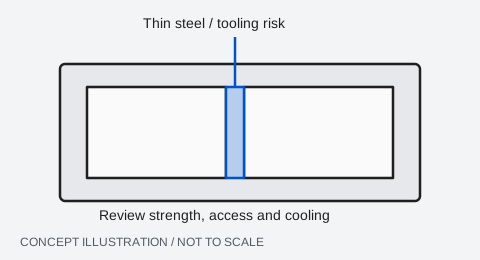
Discuss narrow steel sections, machining access and cooling constraints. Some features may need design changes.
Concept illustrations only, not to scale. Moving components, clearances and actuation are simplified; the full mold design requires project-specific review.
02 / SELECT FOR THE PROJECT
Mold steel selection depends on the plastic resin, expected production volume, surface requirements, and tooling budget. The final steel grade and treatment are confirmed during tooling review.
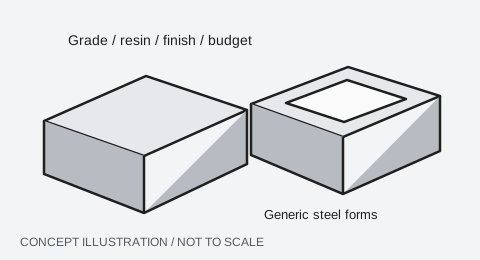
P20, 718H, H13 and S136 are reference designations, not a verified Omita supply list. Grade, supplier specification and suitability must be confirmed before commitment.
No hardness, heat-treatment result or mold-life value is guaranteed by this reference list.
03 / DISTINGUISH THE CONNECTION FROM THE SYSTEM
A gate connects the feed system to the cavity; a runner carries melt toward the gates. Review filling, appearance, location, degating, cost and mold structure together.
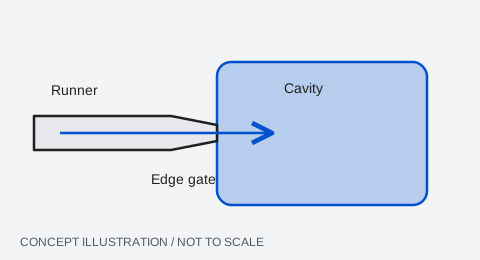
GATE TYPE
Feeds a part from an edge. Review fill direction, gate vestige and trimming access against appearance and function.
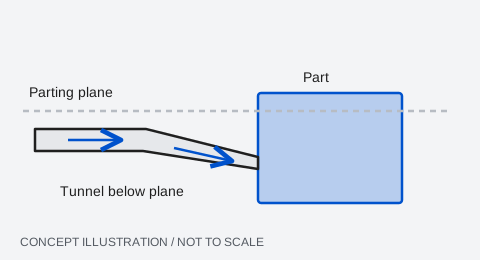
GATE TYPE
A tunnel gate enters below the parting plane. Suitability depends on resin, geometry and the proposed separation and ejection sequence.
GATE TYPE
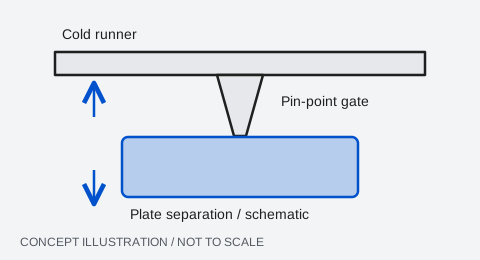
A small pin-point connection can feed a part surface. Review gate marks and the mold separation arrangement; this is not a hot-runner system by definition.
RUNNER SYSTEM
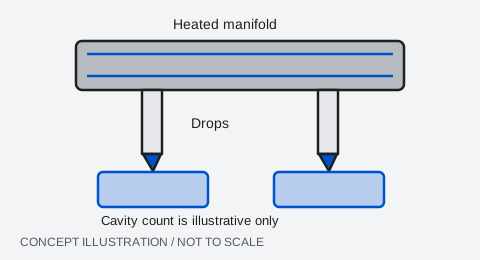
A heated manifold and drops deliver melt toward the gates. Review resin compatibility, gate style, controls, maintenance and tooling budget.
Gate geometry and flow arrows are conceptual, not mold-flow analysis or a verified mold layout. The hot-runner sketch does not commit to a cavity count, gate configuration or equipment supplier.
04 / A SHARED DEVELOPMENT PLAN
Agree the mold proposal, trial requirements, sample approval and change process for the specific project.
Confirm part geometry, revisions and project inputs.
Discuss tooling risks and proposed part changes.
Review the proposed layout and project-specific details.
Cooperating facilities manufacture the agreed tooling.
Evaluate molded samples and record the findings.
Confirm acceptance and any outstanding changes with the customer.
The actual sequence and any additional trials or design changes follow the agreed project plan.
05 / TURN TRIAL FINDINGS INTO DECISIONS
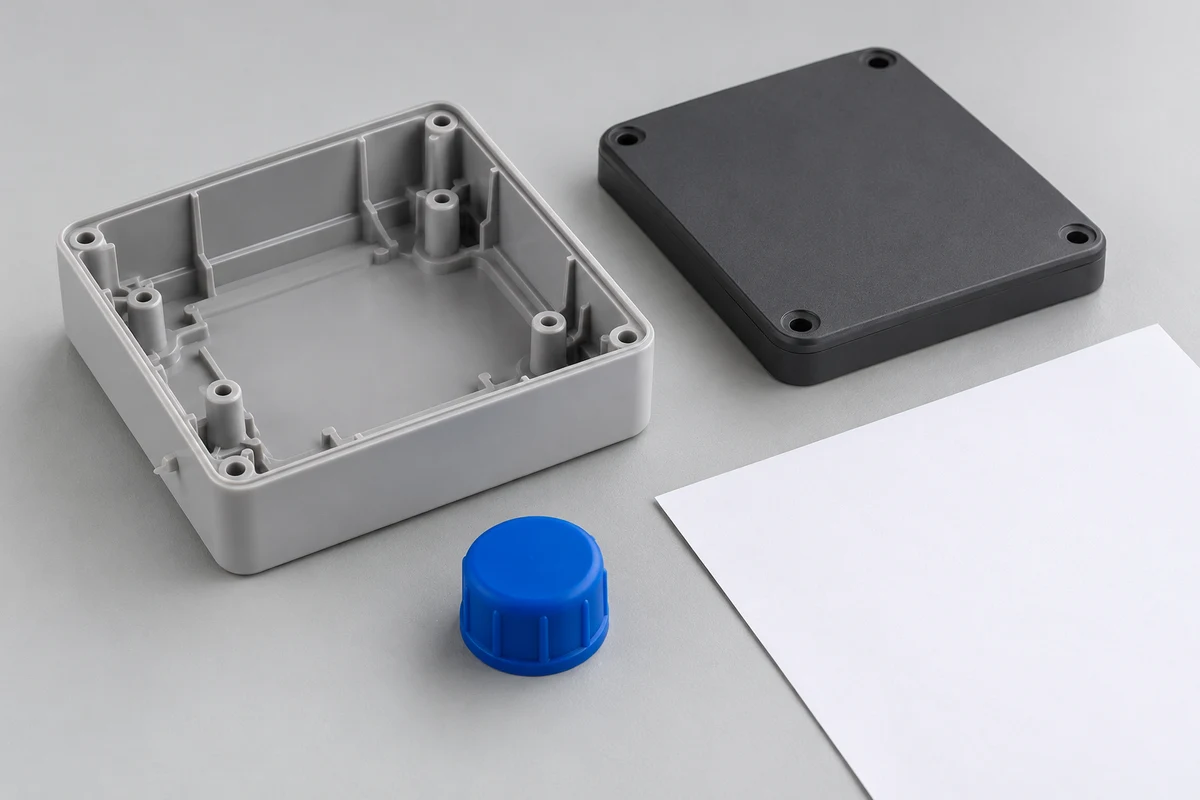
Trial samples are reviewed against the agreed drawing and appearance requirements. Any necessary mold adjustments are discussed before proceeding to production.
Trial dates, sample quantities, inspection records and any modification scope or charges require project-specific agreement.
06 / KEEP THE APPROVED DETAILS CONNECTED
Cooperating manufacturing facilities execute production. Omita coordinates customer communication, engineering discussions, quotations and project progress through delivery planning.
Record the approved revision, acceptance criteria and any open decisions.
Communicate resin, appearance, critical features and inspection expectations.
Review quantities, tooling condition, changes and delivery needs for each order.
07 / BEFORE YOU START A TOOL
Practical questions to clarify at the quotation and review stages.
Prepare a 3D model and revision-controlled 2D drawing, resin preferences, expected quantities and appearance or assembly needs. Note critical features and the intended tooling and production scope.
Selection considers resin behavior, anticipated production quantity, finish, corrosion needs and budget. The actual grade, supplier specification and any treatment requirements must be confirmed for the project.
Review flow paths, visible marks, weld lines, functional surfaces and tooling layout together. Gate style, runner system and separation method are discussed as related but distinct decisions.
Samples are reviewed for appearance, dimensions, shrinkage, warpage, assembly and gate marks. Findings may lead to process adjustments, tooling changes or another review before customer approval.
Mold ownership, custody, maintenance responsibilities and any transfer arrangements should be expressly agreed in the quotation or order agreement. No default ownership or maintenance policy is implied here.
YOUR NEXT TOOLING PROJECT
Prepare your part drawings, resin preferences, expected quantity and technical notes for review.
Online RFQ submission is not yet enabled. Preparing details on the quote page does not send an inquiry or upload files.